
Did You Know Apples "Hibernate"?
Floury apples? Not on our watch!

There's nothing quite like biting into a lovely, crisp apple. And there's nothing quite as disappointing as expecting that satisfying crunch and getting a mouthful of soft, floury apple instead. Yuck!
When is apple season in New Zealand?
Our apple harvest generally runs from February through to May, with different varieties ripening at different times.

Our main apple-growing regions include Hawke's Bay, Nelson and Central Otago, where the climate and growing conditions are well suited to producing beautiful apples.
But if NZ apples are only harvested for a few months each year, how do we enjoy them all year round? Well, there's a rather clever explanation.
Apples go into hibernation. Well, sort of!
The secret is something called Controlled Atmosphere (CA) storage.
And it's a lot more sophisticated than simply keeping apples in a chilled room!
In ordinary cold storage, temperature is the main thing being controlled. But CA storage goes several steps further, carefully managing oxygen, carbon dioxide, nitrogen, temperature and humidity.
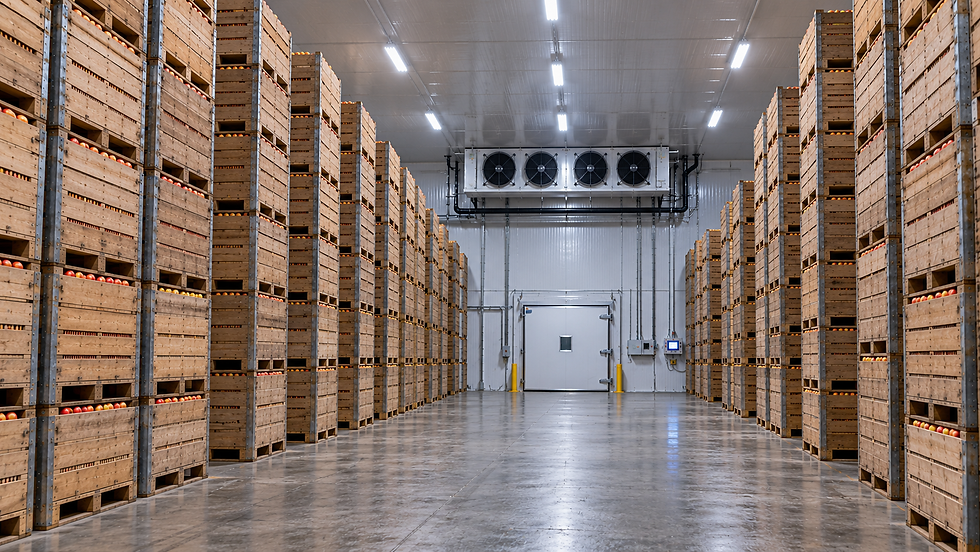
The air we breathe contains around 21% oxygen. In a CA storage room, that can be reduced to around 2%, dramatically slowing the apples' natural ripening process. Think of it as putting them into a kind of hibernation!
Apples also naturally produce a gas called ethylene, which encourages ripening. Some CA storage systems remove this gas from the air, helping slow the process even further.
The result? Apples that can retain their crunchiness, juiciness and flavour for months after they've been picked.
They're not frozen or treated with preservatives as part of the CA storage process. It's all about carefully controlling the environment they're stored in.
But there's a cost to keeping apples crisp
CA storage isn't cheap. Specialised equipment, energy costs and constant monitoring make it a significant investment for the apple industry.
And here's another interesting bit. Once a CA room is sealed, it stays that way until the apples are ready to come out. Opening it means losing that carefully controlled atmosphere, so operators must manage exactly when the apples are released.
It's a lot of effort and expense behind something as simple as a crisp apple!

Why do some apples go floury?
As apples ripen, the structure of their flesh gradually changes. The cells begin to separate more easily, and that lovely crisp texture can become soft and mealy. Some varieties naturally hold their crunch better than others, but storage and handling also play a big part.
CA storage helps slow down those changes, which is why you can still enjoy a beautifully crisp NZ-grown apple in October, even though it may have been picked back in March or April.
At Eatlocal, we're fussy about our apples
At this time of year, how apples have been stored since harvest can make a real difference to their quality.
That's why we specifically choose apples that have been kept in Controlled Atmosphere (CA) storage. They might cost a little more, but we reckon it's worth it.
Whether they're heading to your home or your office, we want every apple we deliver to be firm, crisp and full of flavour.
We might be fussy, but we reckon that's a good thing. Life's too short for floury apples!
Joanne Webb runs Eatlocal.nz, delivering premium, locally sourced fruit, veges, and artisan foods across the South Island. Passionate about supporting New Zealand growers, she personally packs every order to ensure quality and freshness. When she's not working on Eatlocal, you’ll find her walking her mini Schnauzer, Zac, or contemplating marathon training - again!


Comments